Harnessing Nature Through Research & Innovation
Driven by integrity, trust, mutual respect, teamwork, openness for suggestions, and continual learning/ improvement as its core values, the Research & Development department has been accorded recognition by the Department of Scientific and Industrial Research, Government of India. The R&D activities are vertically integrated from product development through standardization to clinical research and validation, involving modern scientific methods and tools,
and the different departments of the R&D work in close synergy to assure that these resolutions are always heeded and met.
R&D houses dedicated formulation development, phytochemistry, analytical development and clinical research laboratories, sporting state-of-the-art instrumentation facilities.
Scientists with diverse backgrounds and belonging to specialized fields constitute a dynamic team, looking after these departments.
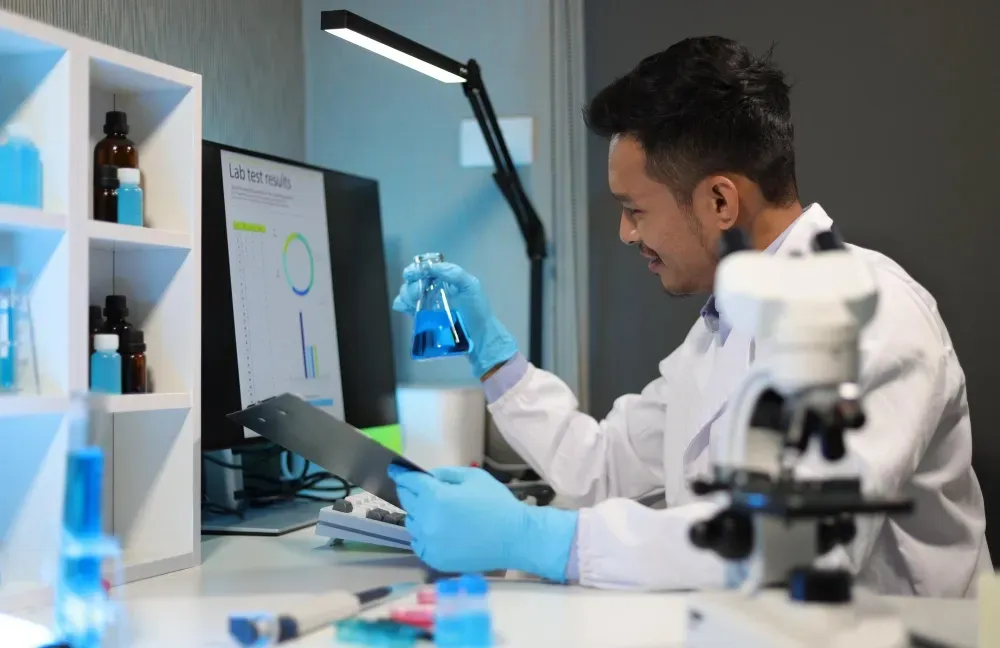
Designing of a safe, efficacious, cost-effective and stable formulation is a very important step in any successful product’s life cycle. The formulation development department caters to the dual needs of the development of new formulations and the revision of existing formulations and seasoned experts with decades of experience in herbal product development serve our formulation development team. Leveraging on traditional herbal wisdom, all formulations are derived through intensive research and development in a state-of-the-art facility. Selection of herbs based on traditional knowledge and modern literature, their standardization, selection of compatible excipients to augur the product’s efficacy and stability, and optimization of manufacturing process are some of the important tasks of the formulation development department. Selection of the appropriate packaging material that is compatible with the product is key to stability of the formulation. Stability studies, undertaken by the department as per ICH guidelines, serve to determine the shelf-life of the product in the selected packaging material.
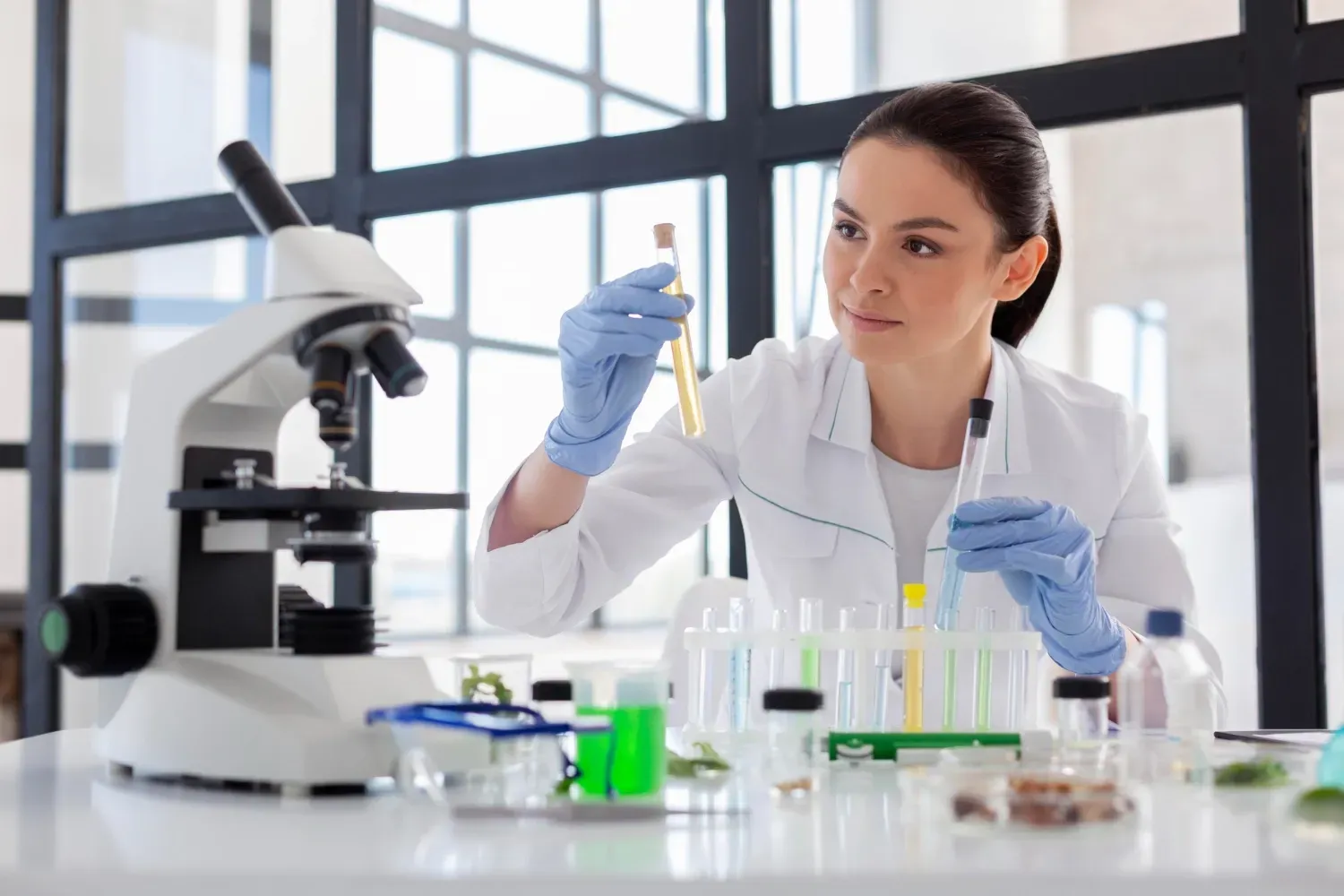
The phytochemistry laboratory isolates phytochemical markers for the standardization of formulations. Phytochemicals of high purity are isolated and characterized for use as reference standards. Bio-assay guided fractionation of herbs is regularly undertaken for the isolation of novel phytoconstituents. Development of new and refinement of existing extraction procedures for different medicinal plants is also undertaken by the laboratory. The plant extracts derived thereof are standardized to contain known amount(s) of biologically active constituent(s). For plants where active / markers are not known, bioactivity guided fractionations are undertaken and active / bio-markers are isolated for the purpose of standardization.
The chemical entities isolated by column and flash chromatography are thoroughly characterized using conventional and advanced spectroscopic (IR, NMR, and Mass spectroscopy) and chromatographic (TLC, HPTLC, and HPLC) techniques.

Ensuring quality in terms of consistency in efficacy is a major challenge in herbal standardization, especially given the fact that raw materials of plant origin can vary a lot depending on numerous factors viz. geographical location, cultivar, stage and season of harvesting, method of processing, etc. The common presence of contaminants and adulterants is also a major challenge. Moreover, methods for the standardization and testing of herbal materia medica are not always available. The dedicated analytical development function tackles these challenges. Well-qualified chemists and pharmacists with several years of know-how and keen understanding of phyto-analytical methods serve the department. It has analytical chemistry and instrumentation laboratories. The analytical chemistry laboratory offers complete wet-chemistry setup for sample preparation, analysis, titration, digestion, and extraction.
The department is involved in analytical method development for qualitative and quantitative assays and the issuing of specifications (STP/SOP/RMS/FPS) for onward use by the QA/QC functions for testing of raw materials and finished goods. Analytical method development and analyses include those for phytochemical markers in raw materials for maintaining their quality and authenticity viz. whole plants, roots, rhizomes, leaves, fruits and seeds, stem, bark, essential oils, etc. as well as in finished goods. The laboratory also undertakes the analyses of heavy metals and pesticide residues in raw materials and finished goods. Besides, the department also validates manufacturing processes and analyzes formulations for stability and pelletization stress.
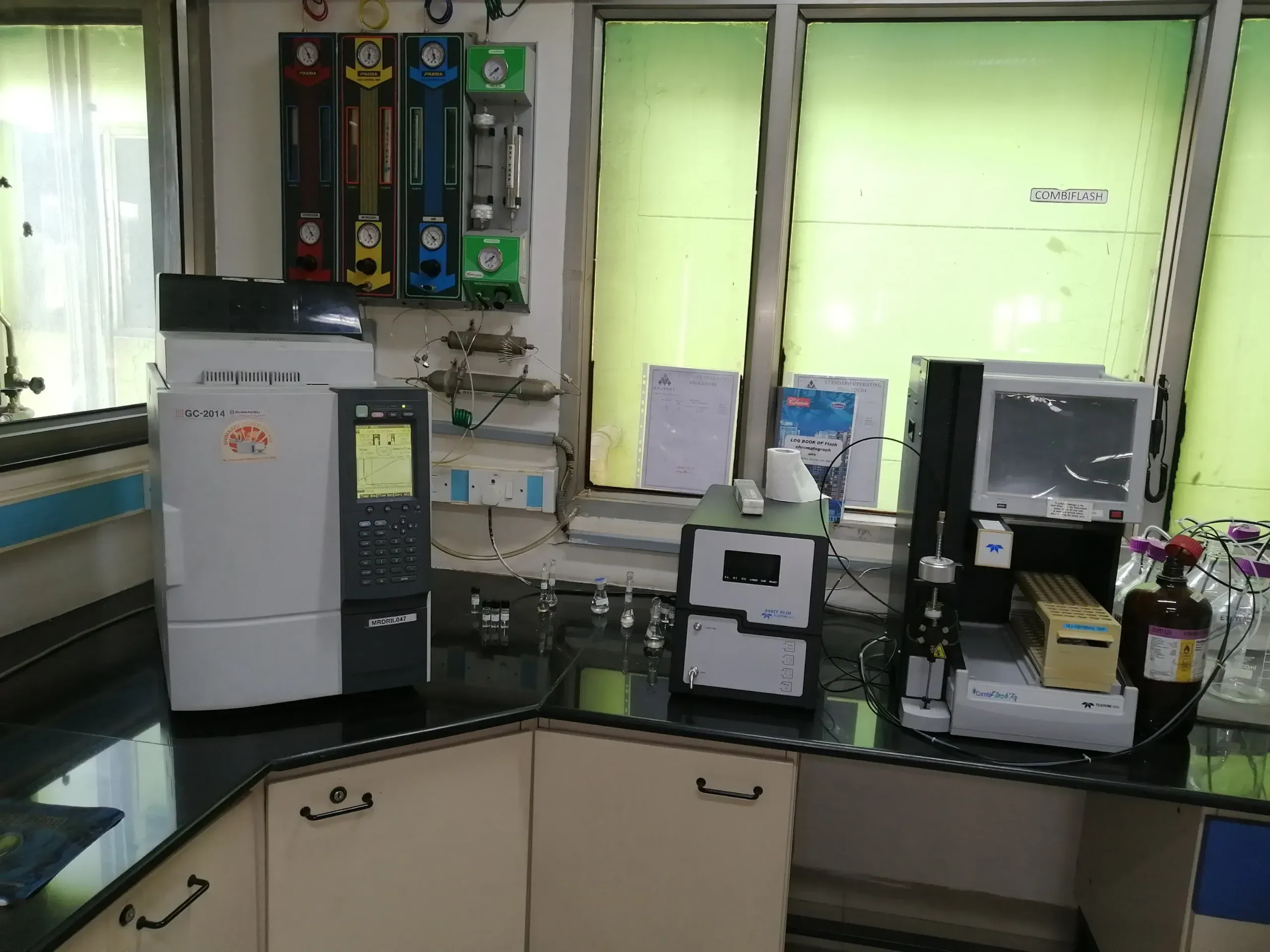
The department also boasts of High Performance Thin Layer Chromatography (HPTLC; Camag, Switzerland), High Performance Liquid Chromatography (HPLC; Waters, USA), Gas chromatography with ECD and FID (GC; Shimadzu, Japan), UV-VIS Spectrophotometer (UV; Shimadzu, Japan), Flash Chromatography with ELSD detector (Teledyne, USA), Protein Analyzer (Velp Scientifica, Italy), Atomic Absorption Spectrophotometer (AAS; Perkin Elmer, USA), Microwave Digester (Anton Paar, Austria), Bomb Calorimeter, Flame Photometer, and Rotary Evaporator (Buchi, Switzerland; Heidolph, Germany) for different types of analyses.
The use of sophisticated analytical techniques on process validation, raw material and finished product standardization, and method development by the department has resulted in 27 publications in peer-reviewed scientific journals and 05 in-house reference volumes. The department has also contributed to the development of 03 monographs on herbs and herbal products included in the Indian Pharmacopoeia.
After passing the initial stage of pre-clinical evaluation for important factors like palatability, convenience of usage, dose determination, side-effects, and appropriate duration of treatment, the products are subjected to clinical evaluations at various research institutes and commercial farms under the guidance of specialists. The Clinical Research department endeavors to have the products evaluated across the length and breadth of the country, allowing an evaluation of the products under differing conditions. Besides, evaluation and validation studies on our products have also been held at Brazil, Egypt, Hungary, Nigeria, Poland, South Africa, Spain, Thailand, USA, and Vietnam. The objectives of these studies are largely three-folds:
- First, verification, demonstration and substantiation of the benefits of a product,
- Second, establishing the consistency of performance of the products across diverse geographical locations, and
- Third, to understand the possible mechanism of the product action, including various aspects of pharmacological evaluation.
The clinical studies continue even after the products have been introduced into the market to keep track of their efficacy and to refine them to meet ever-changing disease and production dynamics. The data hence generated is shared with the scientific community, practitioners, and end-users of the products. So far, nearly 700 research communications have been published on Ayurvet’s products in various national and international scientific journals. Our products have also been the subject of more than 125 dissertations from different parts of the world.
Lack of conviction in herbals and phytogenics for the want of clearly defined mechanism of action is a major impediment in the acceptability of such products. The department has also engaged in advanced studies employing silico reverse pharmacology, transcriptomics, metagenomics, and fluxomics for finding mechanistic insights into the action of our products.